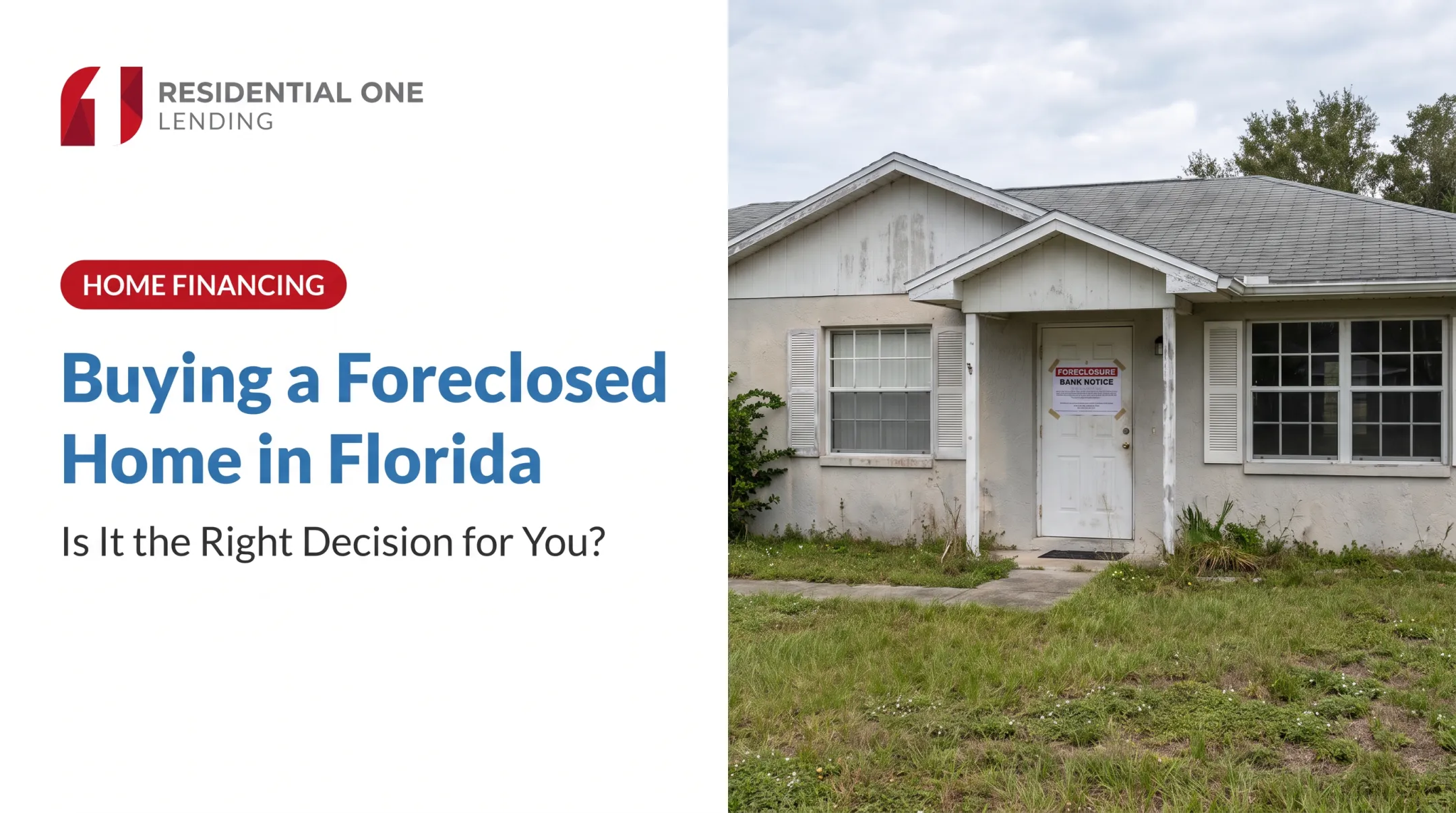
Georgia recorded 1,345 foreclosure filings in a single month in mid-2026, roughly one in every 3,377 housing units, according to ATTOM's foreclosure data. That's a meaningful number of properties moving through pre-foreclosure, auction, or bank owned status at any given time.
This guide walks Georgia homebuyers and investors through the process: choosing a foreclosure type, arranging financing or cash, finding legitimate listings, completing due diligence, bidding or making an offer, and closing — including the risks that rarely make it into the marketing copy.
Key Takeaways
- Georgia foreclosure buys follow three paths: pre-foreclosure/short sale, auction, or bank owned REO.
- Arrange financing or proof of funds first, then match the property and sale terms to your lender.
- Verify title, liens, taxes, occupancy, and physical condition before committing any money.
- Calculate full acquisition and ownership costs; the advertised discount alone means nothing.
- Confirm current Georgia rules with an agent, title company, attorney, and mortgage broker before bidding.
What a Foreclosed Home Is and Why Buyers Use the Process
A foreclosure is a status that changes as the property moves through a timeline, not a single transaction type.
Three Ways a Foreclosure Reaches the Market
- Pre-foreclosure: The borrower has missed payments (typically after 60 to 90 days) but the lender hasn't sold yet. A short sale can happen here, letting the owner sell for less than what's owed.
- Foreclosure auction: Georgia is a non-judicial foreclosure state, so the lender generally doesn't need a judge's approval to sell at a public sale.
- REO (real estate owned): If nobody buys at auction, the property reverts to the lender or investor and is listed as bank owned.
The real goal is more than buying under market value. You need a property whose total cost, condition, title, and possession risk fit your financial plan.
A steep discount with a collapsed roof, a tax lien, and a holdout tenant is still a project—discount included.
REO and pre-foreclosure purchases often allow more conventional steps: inspections, financing contingencies, and a standard closing process. Auctions are different. You may get limited or no interior access, strict payment deadlines, and as is terms with no contingencies at all.

Buyers pursue foreclosures for clear upsides:
- Below market pricing
- Renovation equity potential
- Inventory that often never hits a typical MLS search
Those upsides sit next to real downsides:
- Deferred maintenance and unknown structural damage
- Unpaid liens and title defects
- Occupants who haven't moved out
- Minimal seller disclosures
- Financing that can fall through if the property doesn't meet lender standards
How the Foreclosure-Buying Process Works in Georgia
The foreclosure buying path works more like a decision tree than a fixed checklist. You identify the foreclosure stage, prepare funds, locate a property, investigate it, submit an offer or bid, then close or take possession. Here's how each stage works.
Step 1: Decide Which Type of Foreclosure Purchase Fits Your Situation
Compare your options before you start searching:
- Pre-foreclosure/short sale: Slower, often negotiable, and may allow inspections — but requires lender/servicer approval that can take weeks.
- Public auction: Fastest path to ownership, lowest prices, but limited or zero inspection access and firm payment deadlines.
- REO: Listed like a normal resale, usually inspectable, sometimes financeable, but priced closer to market value than an auction property.
First time buyers generally do better with a property they can inspect and finance. Experienced investors with verified cash reserves are better positioned to handle auction risk.
Step 2: Set a Budget and Arrange Financing or Cash
Before you look at a single listing, know what you can actually spend and how you'll pay for it:
- Mortgage preapproval for REO or pre-foreclosure purchases where financing is realistic.
- Proof of funds if a seller or servicer requires evidence you can close.
- Hard-money financing for investors who need speed and flexibility.
- Certified cash for auctions, where deposits and full payment are often due on a strict schedule.
Financing eligibility for conventional, FHA, VA, USDA, or renovation loans depends heavily on the property's condition, occupancy status, intended use, and how it appraises. A home with a failing roof or missing HVAC system may not qualify for standard financing until repairs are made, which is where renovation loans can help.
If you're comparing mortgage programs before you start searching, Residential One Lending (Georgia Mortgage Broker License GRMA#50048) works with Georgia buyers on conventional, FHA, VA, USDA, and renovation options such as FHA 203(k) and Fannie Mae HomeStyle loans.
An early broker conversation clarifies what's realistically financeable. Not every foreclosure can be financed with a mortgage.
Step 3: Find the Property and Review the Sale Source
Search channels include:
- MLS listings through a real estate agent
- Government and GSE portals: Fannie Mae's HomePath, Freddie Mac's HomeSteps, and HUD Home Store
- County or legal foreclosure notices
- Reputable auction platforms such as Auction.com or Xome
Third party listing sites aren't always accurate. Confirm every detail (price, condition, sale date, terms) directly with the seller, servicer, auctioneer, or official county record before you get emotionally invested.
Step 4: Inspect, Value, and Investigate the Property
Access varies enormously by foreclosure stage. Never assume an interior inspection, seller disclosure, or working utilities will be available.
When inspection is permitted:
- Hire a professional inspector, plus contractor estimates for repairs
- Check the roof, foundation, and major systems separately
- Run environmental checks if the property warrants it
- Calculate after repair value if you're planning to renovate and resell
Whether or not you can get inside, always run a title search, review tax and lien records, check zoning and code compliance, confirm insurability, and investigate occupancy. These checks routinely uncover costs that never show up in the listing price.
Step 5: Submit an Offer or Bid Within a Firm Maximum
The mechanics differ sharply between an REO/short sale and an auction.
REO or short sale:
- Submit a purchase contract with preapproval or proof of funds attached
- Include earnest money, typically returned if the offer is rejected, but at risk if you walk away after acceptance
- Add contingencies for inspection, financing, and appraisal where allowed
- Expect lender or servicer approval delays, especially on short sales
Auction:
- Register in advance; some platforms require a credit card hold before you can bid
- Understand buyer's premiums and deposit requirements before the event; Auction.com notes a buyer's premium of 5% of the winning bid or $2,500, whichever is greater, with earnest money due within one business day
- Bring certified funds and know your payment deadline
- Set a hard maximum bid before the sale starts, and don't move it once you're in the room
Step 6: Complete Appraisal, Underwriting, Closing, and Possession
A financed REO purchase follows a familiar path: appraisal, underwriting, insurance, any required repairs, then closing with title insurance, deed transfer, prorations, and recording. Auctions work differently: payment and transfer timelines are usually much tighter and spelled out in the sale contract, not a standard mortgage timeline.

If the property is occupied, get Georgia specific legal advice before you contact occupants, change locks, or start any removal process. Federal tenant protections may apply, and a new owner generally has to go through the courts rather than handling it directly.
Where Foreclosed Homes Are Bought
Georgia foreclosures move through three settings, and a property can pass through all of them:
- Pre-foreclosure/short sale: the borrower and lender negotiate before a public sale
- Public auction: held on the courthouse steps in the county where the property sits
- Post-auction REO: properties that don't sell at auction revert to the lender and get relisted
The lifecycle starts when a borrower falls behind and the lender initiates foreclosure. The home may sell before auction, sell on the courthouse steps, or go unsold and become REO.
Some steps recur regardless of path: listing searches and market monitoring never stop. Others only happen once you're pursuing a specific property: inspection, appraisal, bidding, title work, and closing.
Reliable sources to check:
- County legal notices and GeorgiaPublicNotice.com for foreclosure notices
- HomePath, HomeSteps, and HUD Home Store for government and GSE owned REO
- The Georgia Attorney General's mortgage and foreclosure page for current procedural rules
Procedures and listing practices vary by county, seller, auction platform, and property type. Always confirm current terms before acting.
Key Factors, Risks, and Common Misconceptions
A foreclosure's real affordability depends on five factors beyond the sticker price.
Property condition. Look beyond cosmetic issues: deferred maintenance, vandalism, disconnected utilities, environmental concerns, missing permits, and contractor estimates all factor into the true cost.
Total transaction cost. Add up the purchase price, earnest money or auction deposit, buyer fees, closing costs, title work, insurance, taxes, utilities, immediate repairs, carrying costs, and potential legal expenses.
Financing and appraisal. A low price doesn't guarantee loan approval. Condition, valuation, occupancy, and program specific rules can all derail financing.
Title and liens. Require a full title search (Georgia's Real Estate Deed Index covers records back to 1999) and get professional review of judgments, tax claims, easements, and other encumbrances. Title insurance protects you afterward.
Occupancy and possession. A former owner, tenant, or other occupant may still be living there, and removal often requires a formal legal process.

Two misconceptions cause the most damage:
- "Every foreclosure is a bargain." Repairs, fees, competition, delays, and legal exposure can wipe out the apparent discount fast.
- "All foreclosures can be inspected, financed, and negotiated like a normal sale." Those protections depend entirely on the sale type and the written terms. Never assume they apply.
Skip the foreclosure route if:
- You don't have cash reserves for surprise repairs
- You need a firm move in date
- You can't tolerate delayed possession
- You can't get professional title and legal review before committing funds
If any of that sounds familiar, an inspected REO, a conventional resale, or a renovation loan on a non-distressed property may serve you better than chasing a discount you can't fully evaluate.
Conclusion
Buying a foreclosed home in Georgia comes down to five moves:
- Pick the right foreclosure stage for your risk tolerance
- Line up financing or cash
- Verify the property and title
- Calculate the complete cost
- Follow the sale terms exactly through closing or possession
The best opportunity isn't always the cheapest one. It's the property whose condition, title, financing, and timeline you can actually manage without surprises.
Before you make an offer or place a bid, get coordinated guidance from a foreclosure-experienced agent, a title or closing provider, an attorney where needed, and a mortgage broker. If you're weighing financing options for a pre-foreclosure or REO purchase in Georgia, Residential One Lending can walk through conventional, FHA, VA, USDA, and renovation loan programs to see what fits.
Keep in mind that not every foreclosure, and no auction property, comes with financing as an option.
Frequently Asked Questions
How do foreclosures in Georgia work?
Georgia foreclosures typically move through pre-foreclosure (including possible short sales), a public auction on the courthouse steps, and, if unsold, bank owned REO status. Exact procedures and timelines should be confirmed against current Georgia law.
How do you find foreclosed homes in Georgia?
Search MLS listings through an agent, government and GSE portals like HomePath and HUD Home Store, county foreclosure notices, and reputable auction platforms. Always verify listing details through the official source before acting.
Can you get a mortgage to buy a foreclosed home in Georgia?
Pre-foreclosure and REO purchases can often be financed if the property and buyer meet lender guidelines. Auctions typically require cash or certified funds on a strict schedule, not mortgage financing.
Do foreclosed homes in Georgia require an inspection?
Some REO and pre-foreclosure listings allow inspections; most auction properties don't offer interior access at all. Understand exactly what "as is" means for the specific sale before you commit funds.
What are the biggest risks of buying a foreclosed home?
Unknown repair costs, title or lien problems, financing and appraisal issues, existing occupants, strict auction terms and fees, and delayed possession are the most common risks. Each one can erase the expected savings.
How long does it take to buy a foreclosed home in Georgia?
Timelines vary widely: short sales can take weeks to months for servicer approval, financed REO purchases follow a normal closing timeline, and auctions can close in days. Always confirm deadlines in the contract or official sale terms.